How To Make Water Fufu From Scratch (Cassava Fufu)

Published Jul 14, 2017
Updated Oct 23, 2025
This post may contain affiliate links. Please read our disclosure policy.
Here is my ultimate guide on how to make water fufu, also known as cassava fufu, from scratch! This one-ingredient recipe shows you how to ferment cassava (yucca root) to make fufu, a West and Central African side dish.
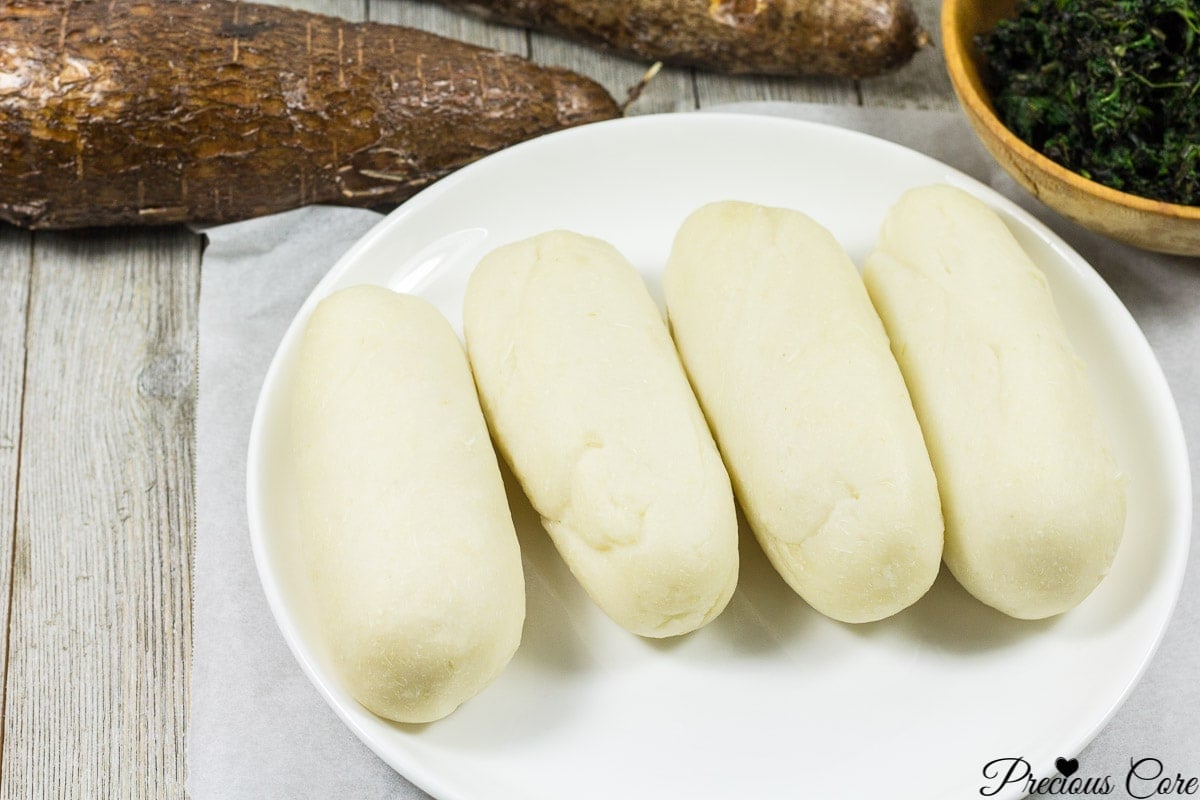
The word fufu is almost synonymous with some countries in West Africa. We love our fufu, be it corn fufu, yam fufu or cassava fufu (water fufu).
Fufu, foo foo or fou fou is a starchy side that is usually eaten with some sort of soup or vegetable. One of the common types of fufu is made from cassava tubers. In Nigeria, it is made slightly differently and called Cassava Fufu or Akpu. In Cameroon, it is called Water Fufu.
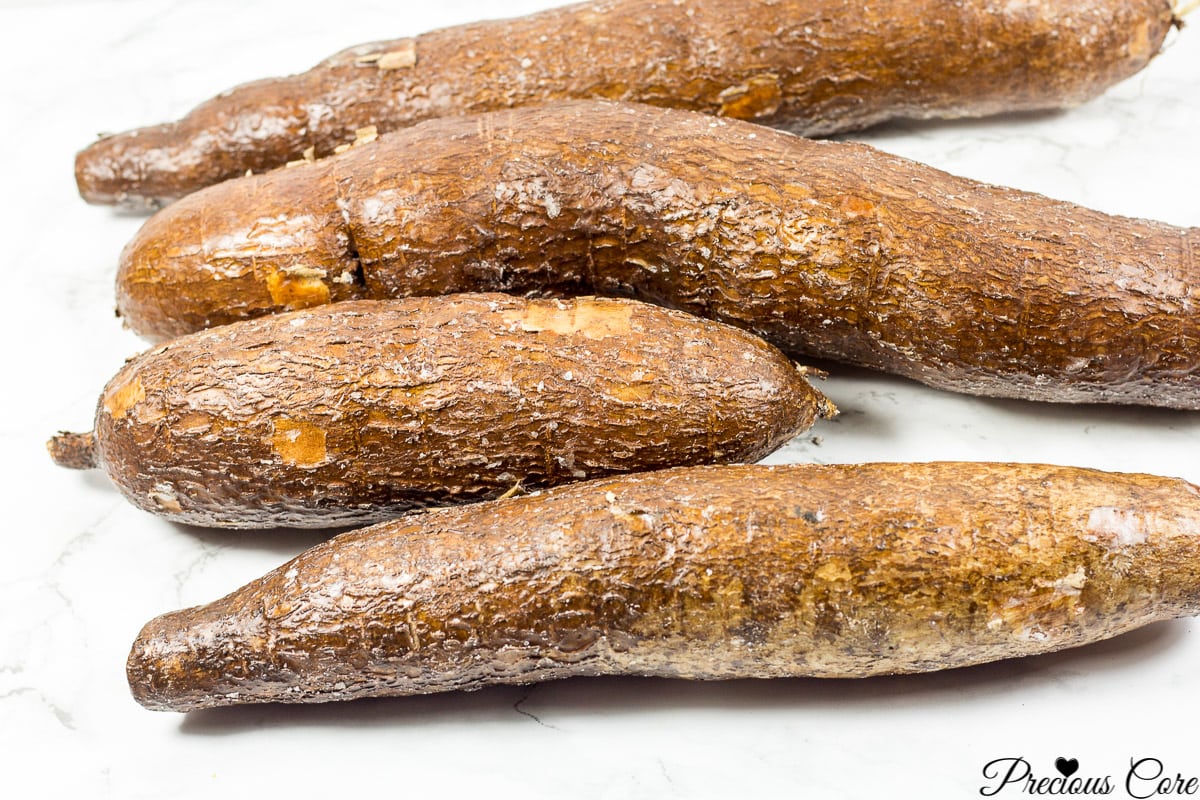
Water Fufu is made by fermenting some cassava root, also known as yuca root. The fermented cassava, which has a pungent smell, is ground into a puree, drained to remove excess liquid, and eventually cooked into delicious fufu, which has a mild flavor.
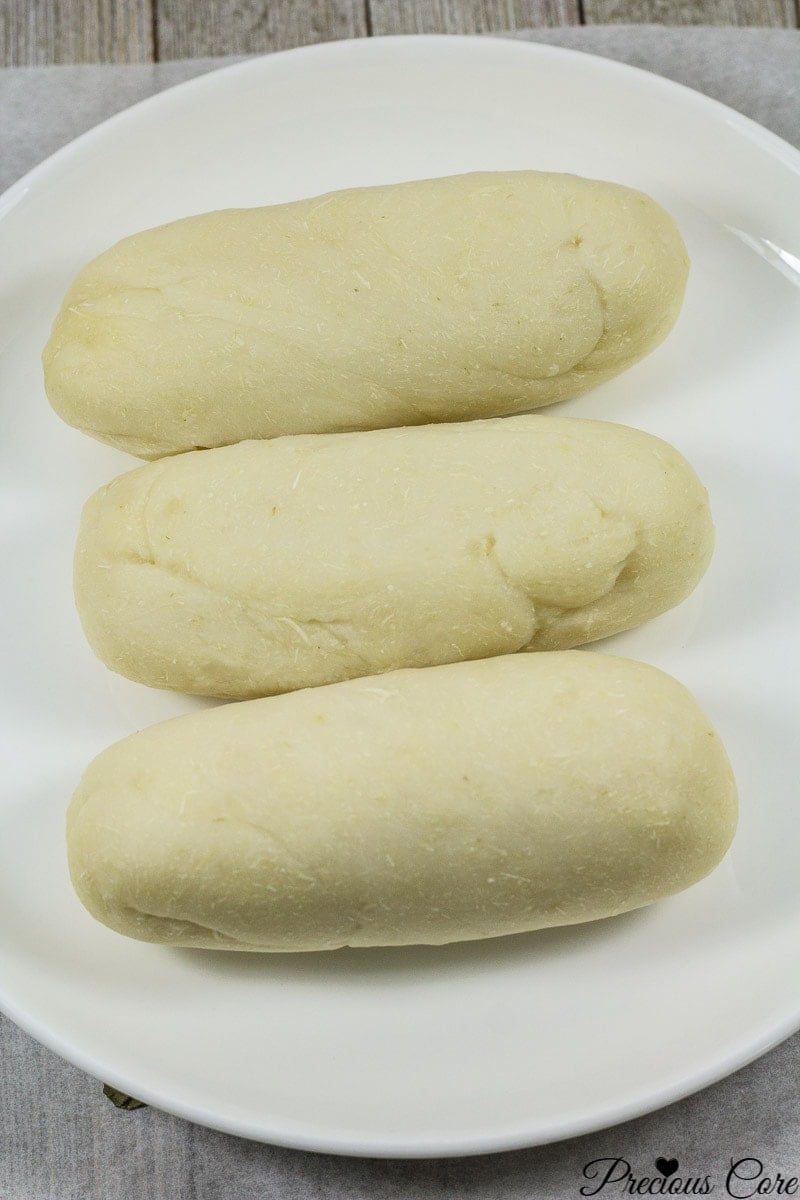
Draining the cassava puree through a cheese cloth makes the process much easier. Serve the cooked fufu with a soup of your choice.
This can be eaten with a variety of soups like ogbono soup, okra soup, or even groundnut soup. The most common way cassava dough is eaten in Cameroon is with a vegetable stew called Eru. The combination of water fufu and eru is absolutely delicious!
In Nigeria, cassava fufu is eaten with egusi soup, bitter leaf soup, ogbono soup, and a host of other soups. I love it with Nigerian egusi soup!
So how does it taste? Cassava Fufu has a unique taste that is hard to describe. Let’s just say it tastes like ground cassava (LOL, I’m trying!) It has some tanginess from the fermentation process.
This beloved staple also has a rubbery texture, and when paired with a vegetable soup or stew, it is so good.
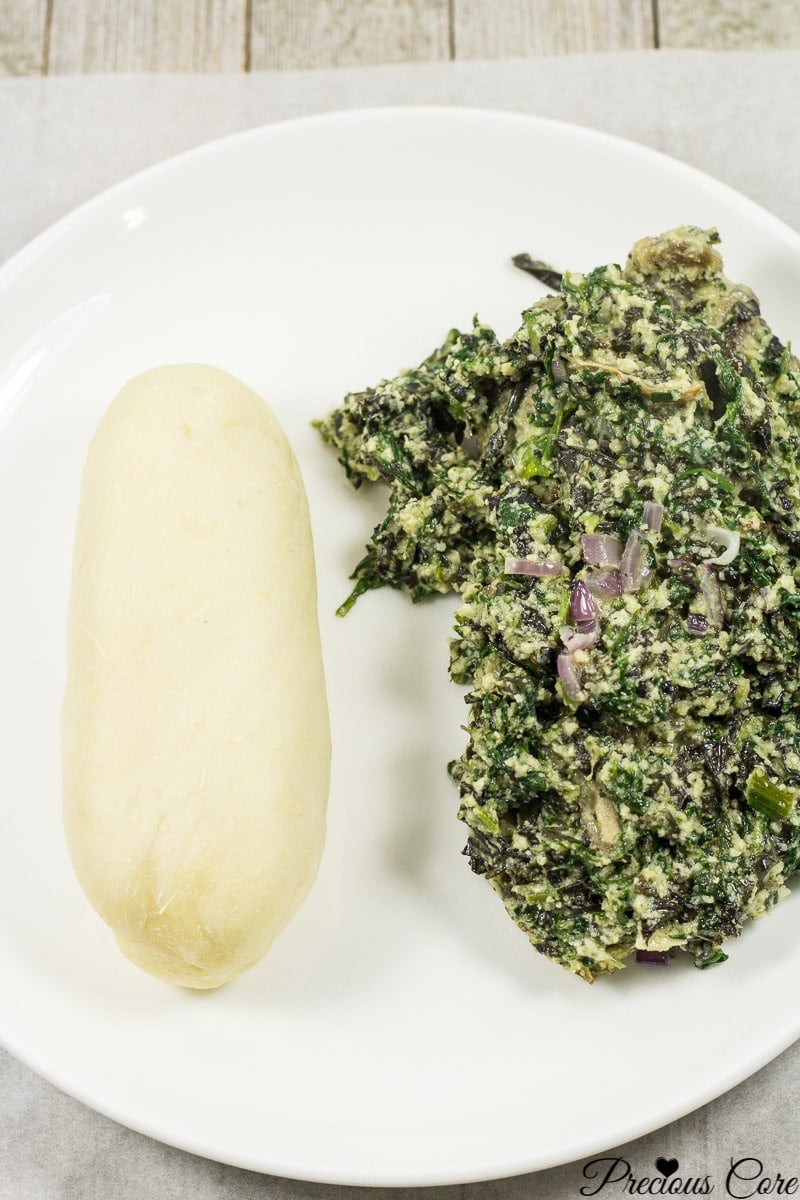
I served it here with Ndole because that’s what I had at home (by the way, this combo is the truth!) I actually wanted to show you guys a picture of water fufu served with Eru, but I just couldn’t resist eating all of the Eru I had at home right after I finished making the fufu. Don’t blame me – Fufu and Eru is just too good!
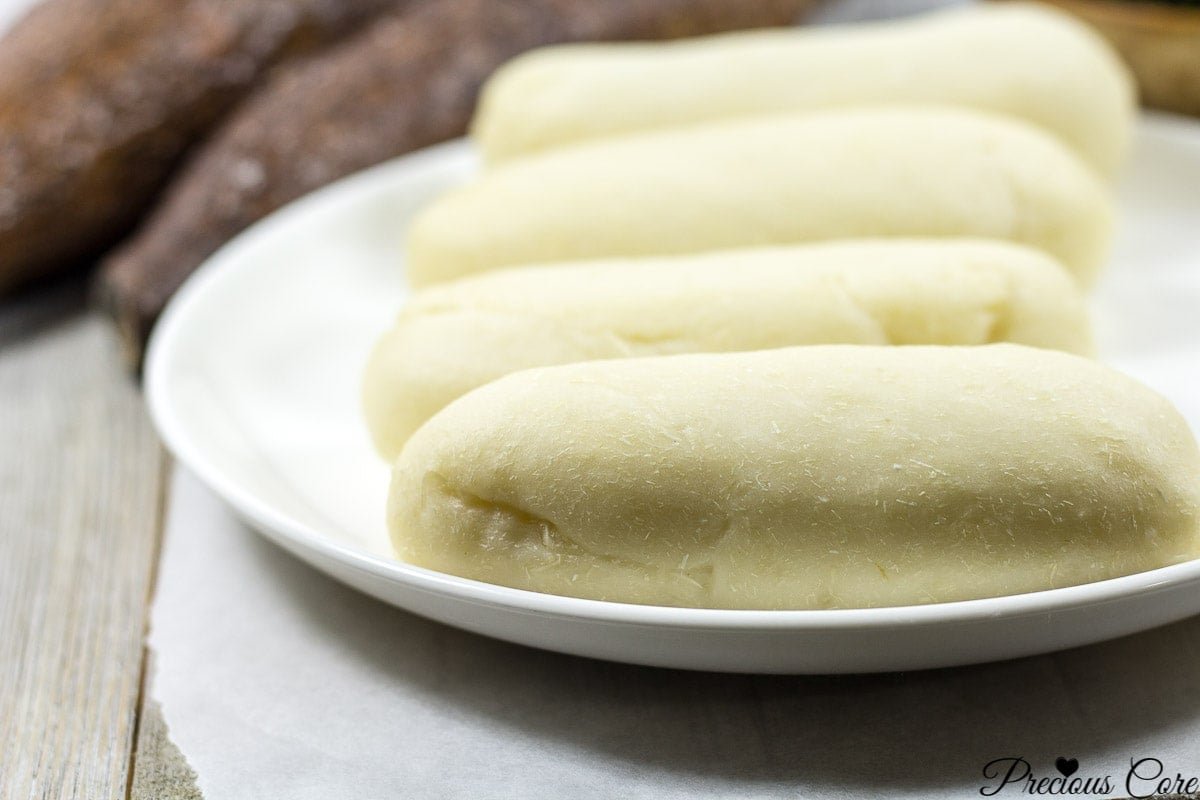
I made a video to show you guys how to make this fufu from scratch. Yep! You’ll see me walk you through the entire process and share lots of tips on how to make your own Water Fufu. No matter where you are, as long as you can find cassava, you can make your own Cassava Fufu.
Watch how to make Water Fufu:

How to Make Water Fufu from Scratch - Cassava Fufu
Ingredients
- 6 large tubers of cassava (yuca root)
- 2 teaspoons baking soda optional

Instructions
- Peel the cassava. Cut each tuber into 5 or 6 pieces then split each piece in the middle part where you can see the fibre. Use a knife to lift up the skin from the divided cassava then use your knife or hand to take off the whole skin.
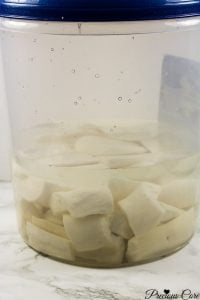
- Wash the cassava thoroughly and place in a large container. Pour in water to completely cover the cassava then add in two teaspoons of baking soda. Cover the container and keep it to ferment in a warm corner for 3 - 5 days. To check if the cassava is well fermented, press with your fingers, if it is soft then it is okay. Note that all might not be very soft but if most are soft then you are good to go.

- Strain the fermented cassava to remove excess water. Then place in a blender or food processor and process into a puree. You may have to do this in two batches.
- Now remove any fibre you see in the puree. You can do this by either running your hand through the puree and picking out any fibre, or by adding water to the puree then passing it through a strainer. It is recommended that you use you hand if you intend on cooking the fufu right away.
- Pour the puree into a clean kitchen towel or cheese cloth the squeeze to remove excess water. If you added more water to enable you pass the fufu through a strainer, you may need to squeeze longer. Or tightly tie the kitchen cloth containing the puree and place in the kitchen sink with a heavy object on top to help push out the water. When the excess water is out, your fufu is ready to be cooked!
To cook the cassava fufu:
- Place the raw fufu in a pot then run through it with your hands to dissolve any excess lumps. Add a quarter cup of water and mix to form a paste.
- Place on medium high heat then cover and let it rest for two minutes. Begin stirring with a wooden spoon, mixing hard enough to dissolve the lumps that form as it cooks.
- Add water as needed (about 1 cup in total) while stirring to ensure that the fufu is not too strong. Please see video to see how the texture should be. Keep mixing on heat until the fufu moves from being bright white to an off-white colour. It is ready when it is an off-white colour.
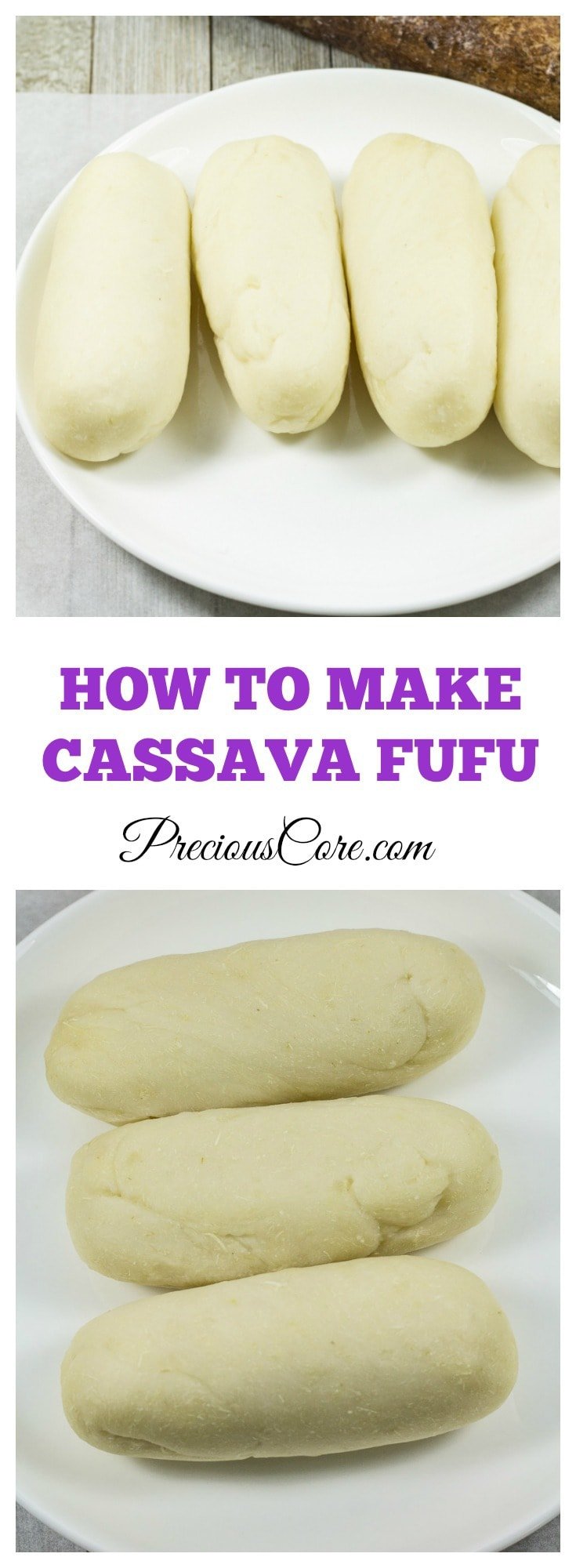
- Turn off the heat then mold the fufu into lumps (shaped like small logs of wood or like balls) if you wish.
- Enjoy with any soup of choice! I love enjoying it with eru or ogbono soup.
Notes
Nutrition









Hello Precious, I’m hoping you will reply. I saw your video and tried to make the fufu last night. I live in the Caribbean and our cassava is fresh and does not need baking soda to ferment. I’m not sure how to know when it’s cooked and I’m worried about eating uncooked cassava! My fufu was not an even colour and when I applied water to mould it into a shape, it seemed a bit “wet”. While we have a tradition of eating cassava in the Caribbean, fufu is completely unknown so I’m not sure how it should be.
Hi Alisa, the uneven colour might be because you didn’t stir it enough so everything is even. It could be quite hard to stir – it is a workout. Also, if it is wet and sticky, it means you put in more water than needed. To save that, you could make a little hard fufu if you have more raw fufu and add to the soft one. The new one you make should be very hard so when you add it to the soft one and mix, it will get to the right consistency. The fufu is ready when it doesn’t taste gummy anymore. Hope this helps.
Hi dear, do I use baking soda in a fresh cassava?
Hi Vidy, are you in Africa? In that case, you won’t need to use baking soda.
Hi dear, do I use baking soda in a fresh fufu?
Watched this video with my hubby last night. Then he asked what is the difference between stew , sauce and soup. All i could think of was the thickness of each. The stew being thicker and soup being lighter. Sauce in between.
Any ideas?
A soup is lighter and contains more water than a stew. So that’s right. A sauce is mostly a condiment that is eaten with other meals. Hope this helps.
I’m so glad I found your site. I love to cook all types of food. I had this at a naming ceremony when I was a child but I’ve only had shortcut imitation ones as since then; I’m excited to make the real thing. Question: It has no salt? Does the baking soda or fermenting give it some salt type taste?
Hi Oleanji, so sorry for the late reply. The baking soda doesn’t make it sound salty at all. Please let me know how it goes if you try it.
Hi Precious, I finally just got around to making this. It’s so good, thank you!!
Hi Sarah, so glad to hear that! Thanks so much for coming back to let me know!!
Hi Precious,
Thank you so much for this information! I can’t wait to try this. Do you know, can the same fermentation process be used to make attieke? I buy attieke in small boxes on Amazon, but it’s expensive for only a little amount and I would like to learn to make my own. I wonder if attieke is cassava fufu that has been chipped into little bits and dehydrated… do you have any idea? Thank you!
Hi Sarah, it is similar to attieke in that they both use fermented cassava but the processes are different. So sorry, wish I could help.
Could you please provide a link for the ninja blender on Amazon. I saw different types. Not sure which of the ninja to buy. Thank you
Hi Kelsey, sure!
Here’s the one I use: https://www.amazon.com/Ninja-Professional-Blender-Nutri-BL660/dp/B00939FV8K/ref=sr_1_1?ie=UTF8&qid=1526700898&sr=8-1&keywords=Ninja+660+bl+30
Also, so sorry for the late reply. I’ve been so busy and just catching up with comments now. Have a great weekend!
Thank you
Thanks. I did buy the Ninja blender. When blending cocoyam, do I have to use a little bit of water to facilitate the blending process or I can blend without adding water?
Hi I wondered whether reshaping it into fries and then
deep frying would give it another twist. Also could you add spices to it?
Hi Titly, I don’t think that will work. For fries I would rather cut the cassava (yuca root) and make fries. Yes, you can definitely add spices to your fries. Hope this helps and so sorry for the late reply.
Mr Gwaro, use to make fufu with Bisquick, it was sooo good. He cooked soup with the fufu.
Sounds interesting.